
A focused marketing site brings the message, structure, visual system, and technical search foundation together from day one.
Web design and development built around the business.
One connected crew from the first question through launch.
Sputnik Digital Effects plans, designs, engineers, launches, and improves custom websites through one connected crew. The people who scope the project stay on it through deployment, so strategy, design, and engineering do not get handed off and diluted.
Localized network60+ sites
WordPress scaleNearly 1,000 pages
Astro publishing35 indexed routes
Authority launch30 URLs
Customer workflowsChat + phone + scheduling
01Custom means useful
A website should carry real business weight.
A website is where a customer decides whether the business understands the problem, can solve it, and is worth contacting.
Website design and development means building that decision point deliberately. Page structure, visual direction, content, speed, search preparation, inquiry paths, and integrations are shaped around what the business and its customers need to do.
Most businesses do not need agency terminology. They need a site that answers a customer's question quickly, presents the offer clearly, and makes the next step obvious. That requires the whole system to be considered before a line of code is written.
Customer decisionUnderstand the offer and take the right next step
Business operationCollect the information your team needs
Technical foundationFast, crawlable, responsive public pages
Future growthA system built to accommodate change
Build paths Business first
Built for the way your business actually works.
Every company has a different reason for needing a website. The build response should match the situation instead of forcing the work into one fixed package.
Useful content moves forward while outdated design, confusing navigation, slow delivery, and platform limitations get rebuilt around current needs.
Products, articles, documentation, and technical material receive page types and reusable components that keep the library readable as it grows.
Shared data, templates, and deployment tooling keep related locations or properties consistent without hand-building every site.
Detailed intake, approved pricing, booking, chat, phone, CRM, analytics, and routing can be designed around the actual customer journey.
02Platform selection
The stack follows the job.
Platform choice comes after discovery, when the content, integrations, scale, ownership, and maintenance reality are understood.
WordPress works well when staff need a familiar publishing system around substantial marketing content. Astro suits content libraries that benefit from static delivery and a readable source. Custom PHP gives the project full control when its workflow, data, or integrations do not fit a general platform.
Those are proven examples, not a closed list. The buyer does not need to select technology before explaining what the website must accomplish.
WordPressFamiliar publishing with custom marketing systems
AstroFast static delivery from structured content
Custom PHPFull control over unusual workflows and data
Selection ruleThe work decides the stack
03Discovery architecture
Search and AI discovery start in the architecture.
Search engines and AI answer systems read the public pages of the website. The useful technical work happens in the architecture, not in a plugin installed at the end.
Important pages need crawlable HTML and real internal links. The hierarchy should reflect the business, with clear relationships between services, products, locations, articles, and proof. Metadata, canonical URLs, structured data, XML sitemaps, and robots directives make those relationships explicit to machines.
Technical SEO, GEO, AIO, and answer-engine optimization all depend on that same public foundation. Performance, mobile usability, accessibility, and clear machine-readable facts prepare the site for current discovery systems without pretending any builder controls the systems themselves.
Read the SEO, GEO, and AIO field guide- Crawlable public HTML
- Useful page hierarchy
- Contextual internal links
- Titles + descriptions
- Canonical URLs
- JSON-LD structured data
- XML sitemap + robots rules
- Mobile + performance QA
- Accessibility foundation
- Machine-readable public facts
Production proof Inspect the work
Five builds. Five different engineering problems.
The argument for a custom build is the work already in production. Each project below demonstrates a different kind of website system without asking one stack or layout to solve every problem.
Proof 01WordPress at scale
A large marketing system with custom inquiry and attribution workflows.
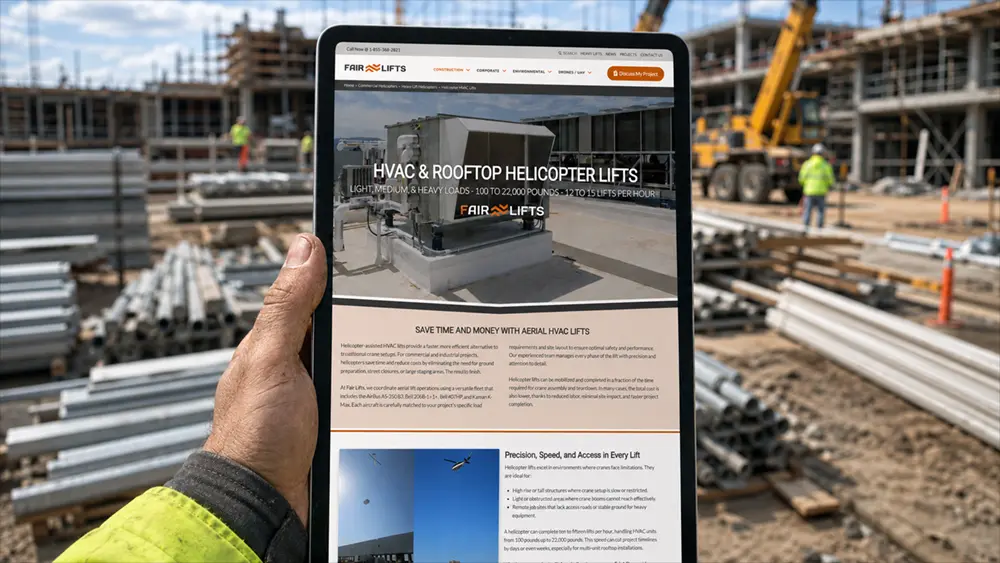
Fair Lifts is a nationwide helicopter services marketing platform built on WordPress with a custom quote engine, per-page call tracking, and nearly 1,000 search landing pages. The project demonstrates that a high-volume content architecture can carry a custom inquiry flow and per-page attribution without losing production discipline.
Inspect the Fair Lifts case study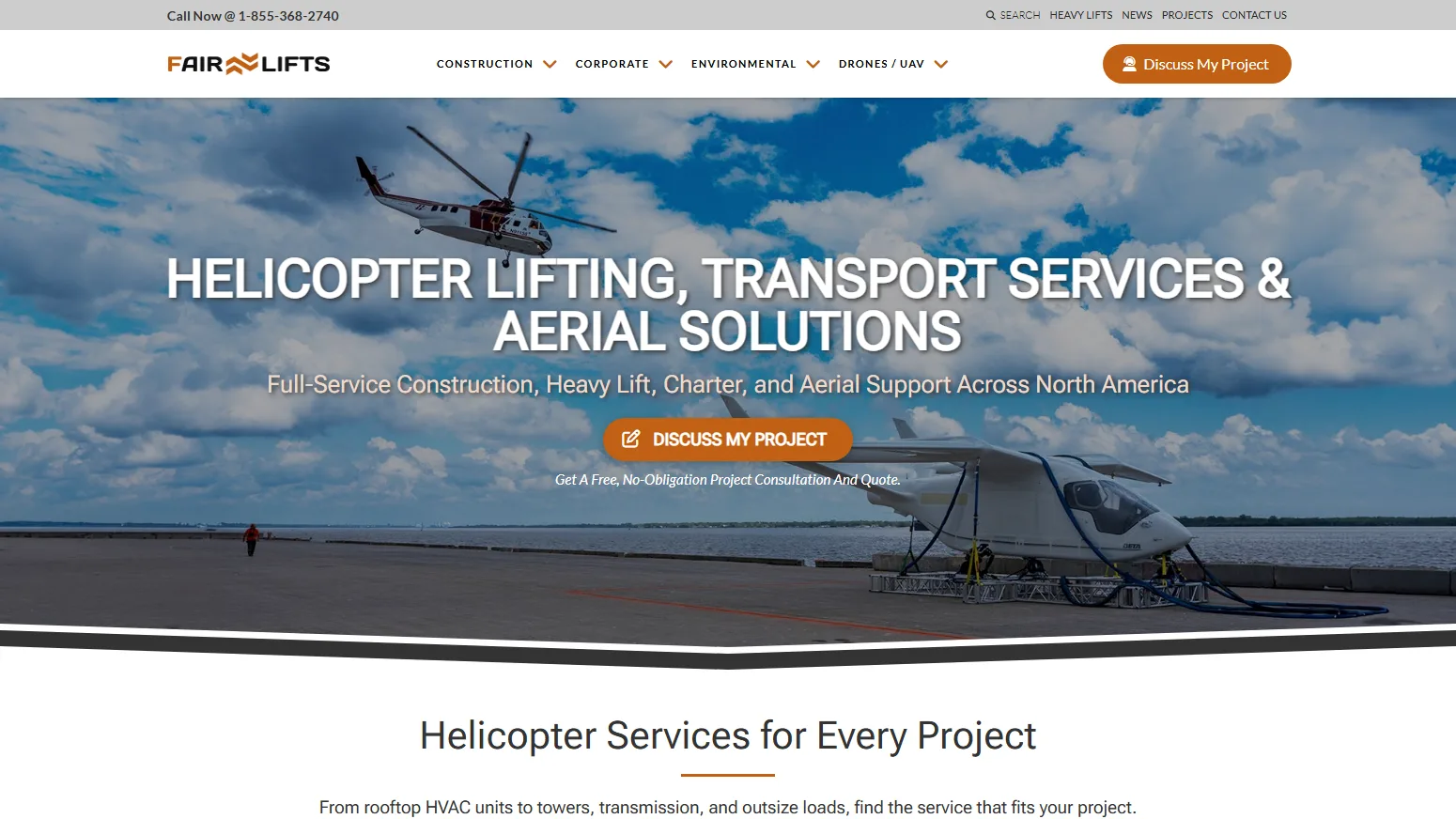
Proof 02Multi-site factory
A production line for more than 60 localized websites.
SKYNET deployed more than 60 city websites from shared data, templates, and a build pipeline. The system demonstrates how Sputnik Digital Effects engineers repeatable multi-site production instead of hand-building every related property.
Inspect the SKYNET case study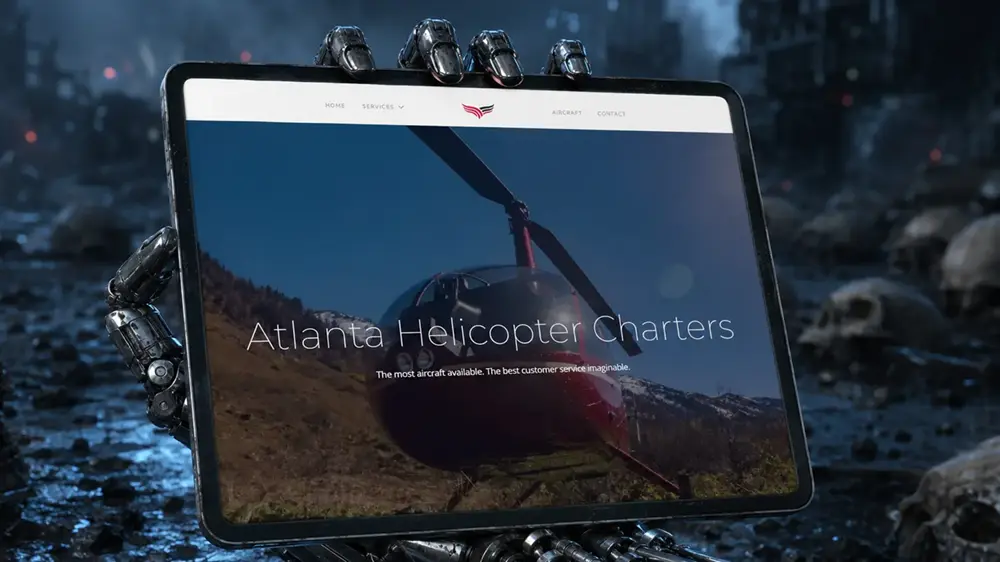
Proof 03Authority publishing
An evidence-backed knowledge library with a clear reading architecture.
American Heavy Lift Helicopters launched as a 30-URL independent knowledge library with three reading hubs, 12 service field studies, 10 technical articles, named authors, primary-source citations, structured data, and a double opt-in mailing list. The depth and organization are the proof.
Inspect the Heavy Lift case study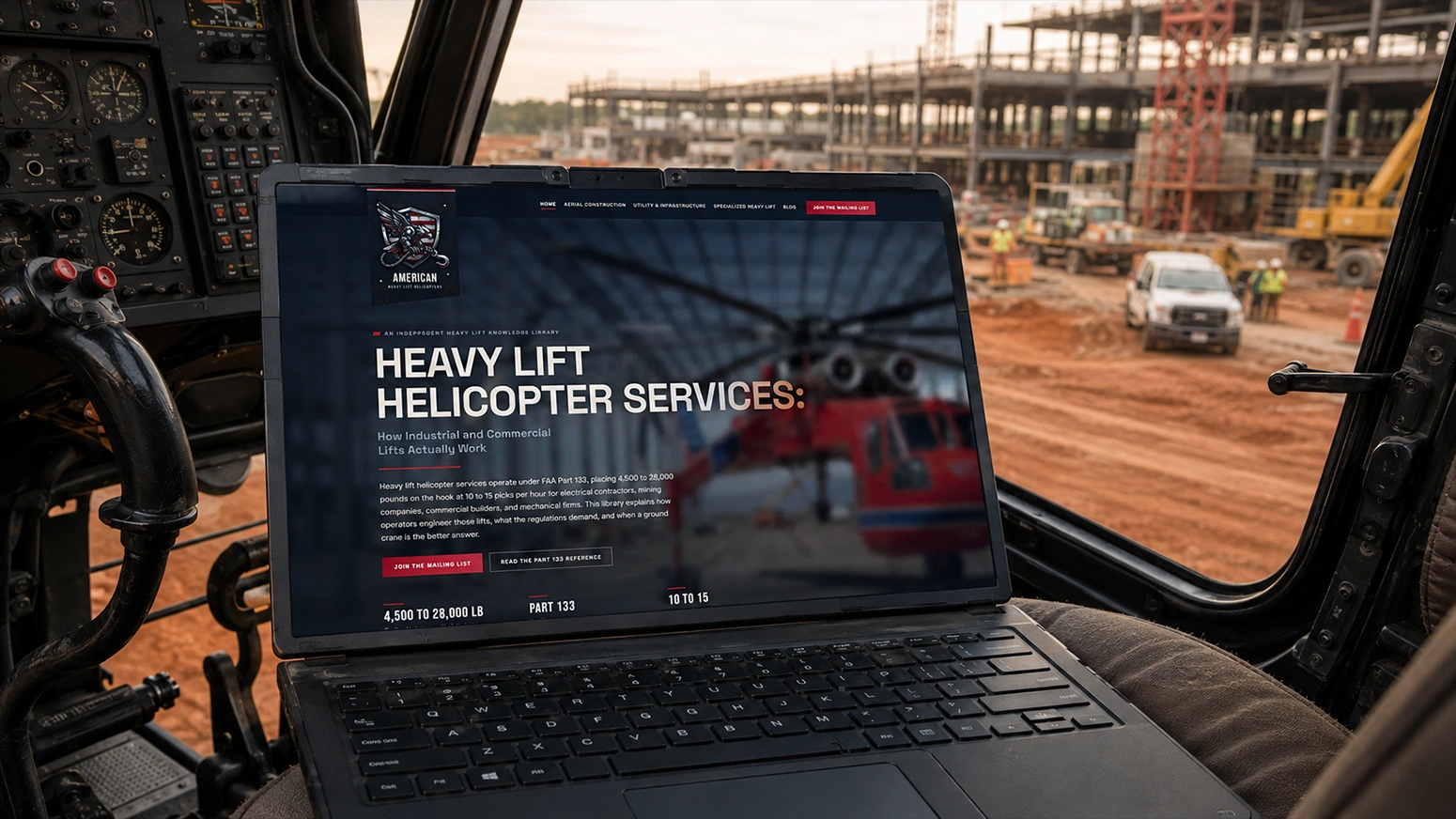
Proof 04Astro content system
A static architecture built for reading and technical discovery.
American Helicopter Charters (helicoptercharters.us) is an independent United States helicopter charter reference where nothing is for sale. Its Astro build turns 80 Markdown source pages into 192 indexed routes through 20 reusable components, responsive AVIF and WebP media, structured data, a generated sitemap, light and dark themes, and view transitions. It also carries the Heliport Atlas, a MapLibre map and public API of every operational FAA heliport, rebuilt from the FAA's own file every 28 days.
Inspect the Astro case study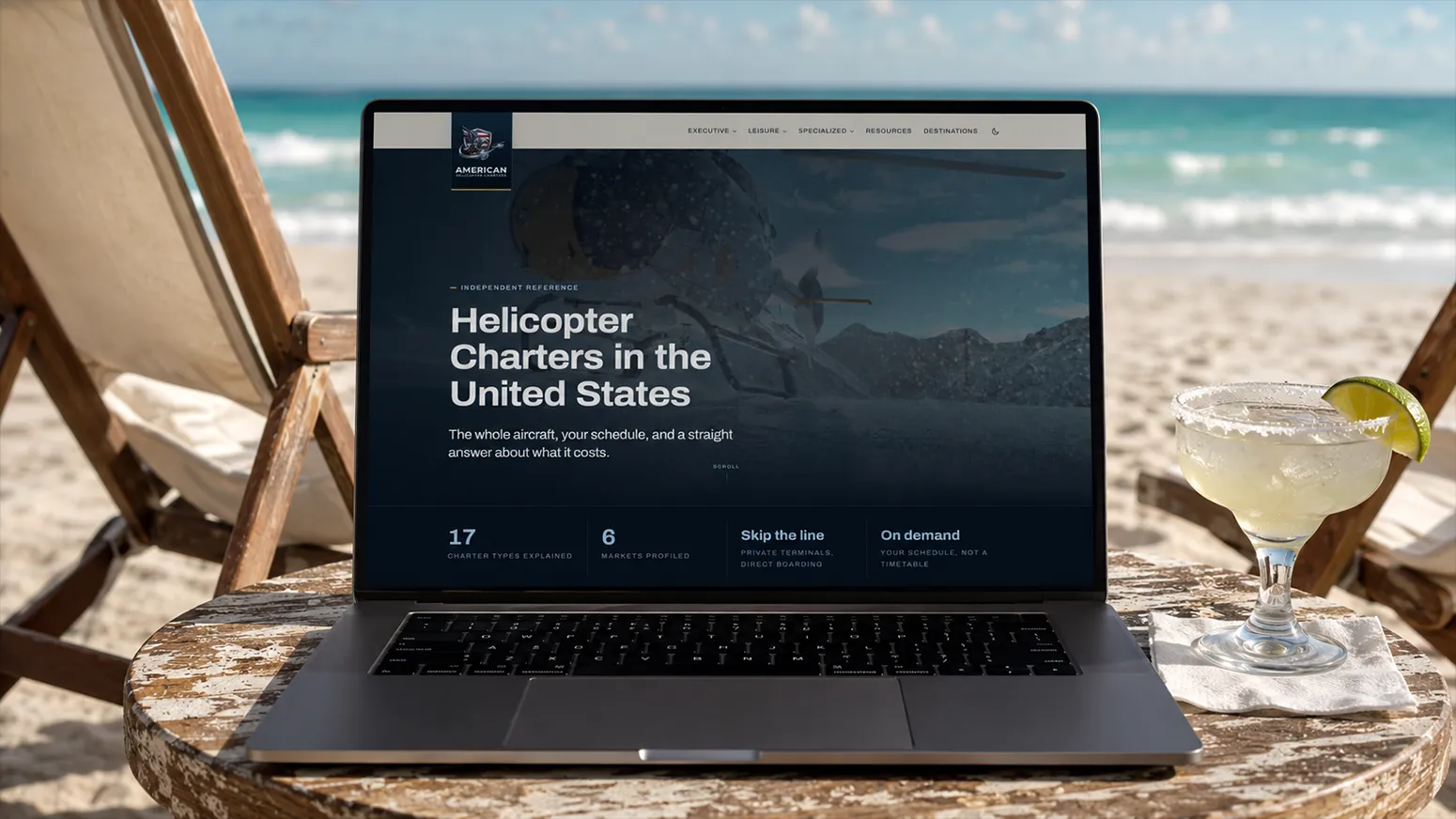
Proof 05Customer-facing AI
A local-service website connected to practical AI workflows.
Clean Getaway is a production local-service website with a branded AI chat assistant and an AI phone system with scheduling and human handoff. The project shows how a custom public website can connect customer questions, project details, and scheduling to the operation behind it.
Inspect the Clean Getaway case study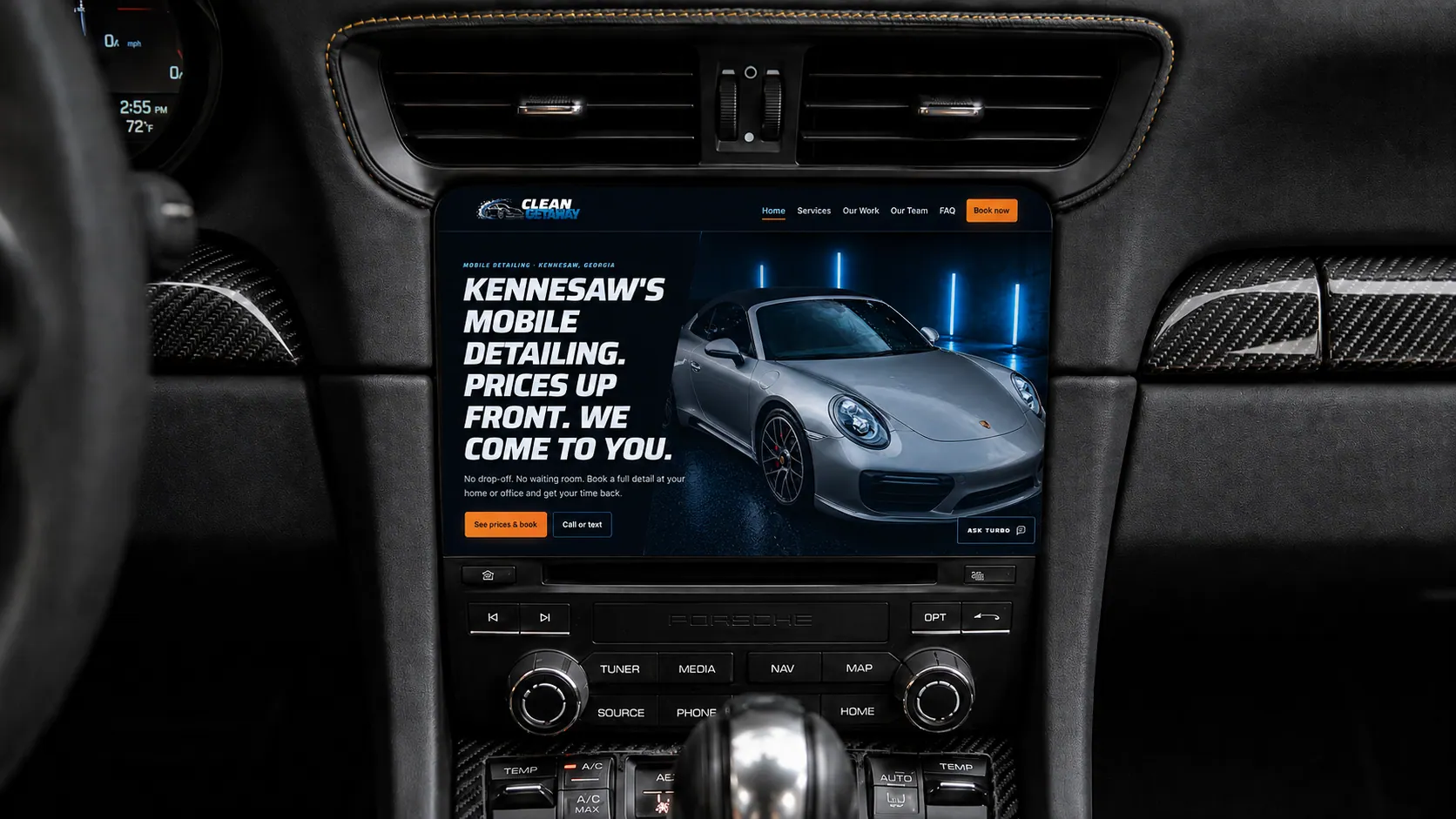
Build sequence One accountable crew
One crew from first question through launch.
The people who hear the original goals make the design and engineering decisions. That continuity keeps the reason for the project connected to the system that ships.
Establish what the business needs and what customers should understand or do.
Set the pages, information relationships, and customer path before construction.
Build a design language that reflects the business and supports the content.
Turn the direction into responsive pages, working forms, analytics, and connected systems.
Check devices, browsers, public routes, metadata, structured data, and customer actions.
Refine the live site from observed behavior and new business requirements.
Choose the pathScope decides
Custom build or AI Websites.
Custom development is scoped around a bespoke website, platform, migration, content system, or integration.
The AI Websites program is a separate defined offer for a small local business that wants a faster, narrower route to a managed website. Complex content, custom workflows, and multi-site needs belong in the custom path. A focused local business site may fit the managed program better.
Custom developmentBespoke architecture, content, workflows, and integrations
AI WebsitesA defined managed offer for local businesses
Project questions Clear before build
Questions worth answering before the build.
A useful scope starts with direct answers about platform choice, ownership, integrations, timing, and the technical work included.
Do you use templates?
No. Every custom project is designed and built for the specific business. Existing patterns may inform the process, but the delivered site is original work shaped by the business goals and customer needs.
Which platform will you use?
The platform is selected after discovery, based on the content needs, integrations, scale, ownership, and maintenance requirements. WordPress, Astro, and custom PHP are proven options, but the decision follows the work.
Can you redesign or migrate an existing website?
Yes. Redesigns and migrations are a core part of the custom service. The existing content is evaluated, what works is preserved, and the structure is rebuilt around current customer needs.
Is SEO included?
Technical search preparation is part of every build: crawlable HTML, page hierarchy, metadata, canonical URLs, structured data, sitemaps, robots directives, performance, mobile usability, and accessibility. This is the technical foundation that search and AI systems read.
Can you connect booking, chat, CRM, analytics, or other systems?
Yes. Custom builds can integrate with the tools your team uses. The specific integrations are identified during discovery and confirmed in the project scope.
How long does a custom website take?
The timeline depends on the scope. A focused marketing site moves faster than a large content system or a custom workflow. The schedule is confirmed in the written project scope after discovery.
Who owns the website and domain?
Ownership terms are confirmed in the written project scope. The specifics depend on the project and are documented before work begins.
What does custom web development cost?
Pricing is scoped per project because every build is different. The cost is confirmed in the written project scope after the goals and requirements are understood.
Start here One useful conversation
Tell Cosmo what the website needs to do.
Describe the business, the current website if one exists, and what customers should be able to understand or do when they visit. Cosmo can start the project conversation on this page.