Idea 01
Product viewers
Email us photos of your product. We build a photoreal 3D model your visitors can spin, zoom, and inspect right on your website. No app, no plugin.
 Sputnik Digital Effects
Modeling worlds since 1997. Now they live in your browser.
The Lab is where Sputnik Digital Effects experiments with dimensional work: traditional modeling and rendering, the newest AI-powered 3D engines, and the web technology that puts the results in your visitors' hands. Everything here runs live. Touch it.
Three assets built for real games, shipped and in development, running live in your browser at a fraction of their original weight. Pick a specimen. Drag to rotate the platform. Scroll to move closer.
A menacing tree with glowing red eyes, rooted in the Tree House map. Generated as a high-density AI sculpt, then finished by hand.
In 1997 we got our hands on Bryce 3D and started producing eye-popping dimensional visuals for EDM events across America.
Back then, Sputnik Digital Effects was primarily a design and Heidelberg print studio for electronic music record labels and event production companies. The 3D work set the flyers, posters, and stage visuals apart: chrome landscapes and impossible geometry in an era when most promoters were still cutting and pasting.
Those renders took days. Not minutes: days, with the machine held hostage by a single frame while the print deadline closed in. The specimens above turn under your cursor in real time, in a browser, over the open web. The tools got faster. The mission stayed the same. Make people stop and stare.
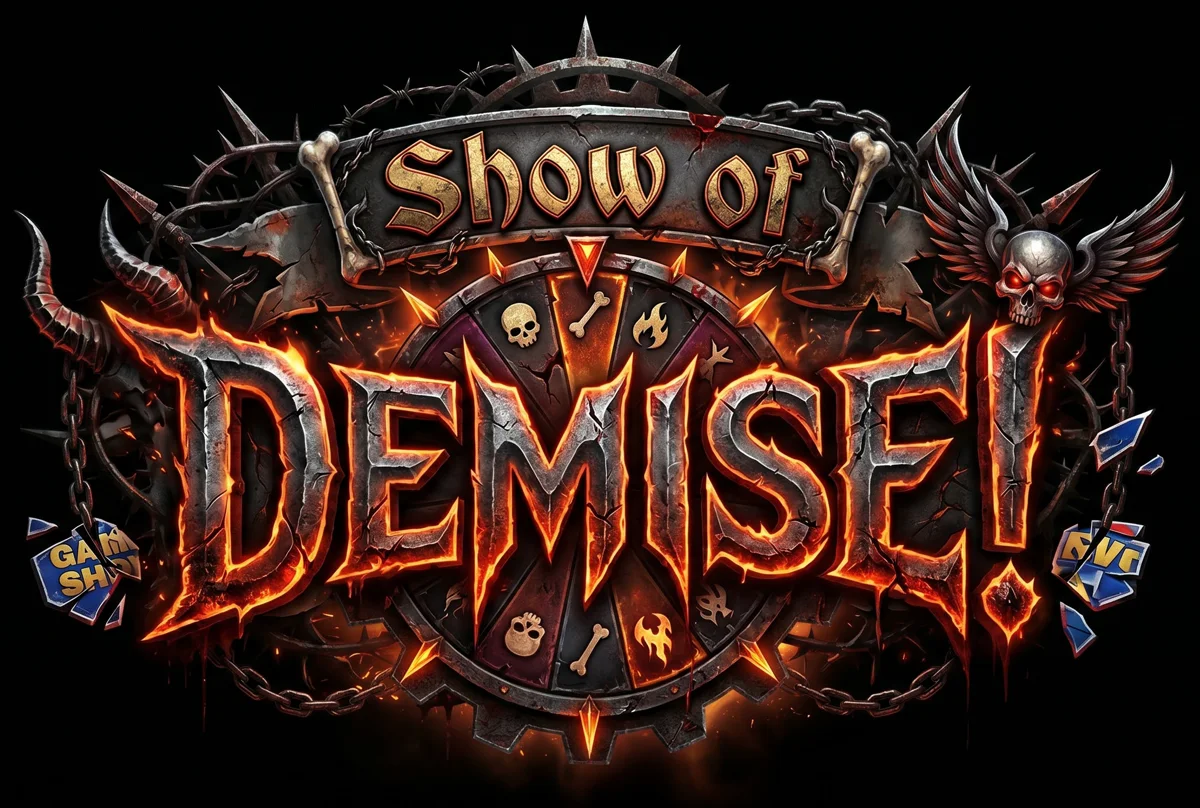
Earlier in 2026 we designed and coded 3D models for Show of Demise, a 1-versus-9 asymmetric horror game dreamed up by Blaze Happel. Two weeks, one playable world.
We built the identity as well as the world: the logo, molten and chained around its own wheel of misfortune, came out of the same studio as the assets. The build ran like a modern software project: a code-first Roblox pipeline with Rojo and the Rokit toolchain, Luau game systems, and AI-assisted asset modeling. The right engine went to the right job. Deadwood was generated with Hunyuan 3D as a high-density sculpt and finished in Blender for the Tree House map. The Wheel of Misfortune came out of Tripo P1 game-ready, low-poly geometry carrying baked normal and metallic-roughness maps, and went up in the Main Stage lobby.
Both then made a second trip, through Draco compression and WebP textures, so they could live on the open web as well: 37.8 MB down to 1.8, and 3.8 MB down to 818 KB, with the detail intact. That is the whole thesis of the Lab. Build it once, place it anywhere.
Interactive 3D is how a website stops being a brochure. Six ways clients put the Lab to work, starting with nothing more than photos of a product.
Email us photos of your product. We build a photoreal 3D model your visitors can spin, zoom, and inspect right on your website. No app, no plugin.
Let customers pick colors, materials, and options and watch the product update live in 3D. Configuration becomes the fun part of buying.
Pull a product apart in space to show what is inside and how it goes together. Manuals, spec sheets, and sales decks all get sharper.
Walkable showrooms, venues, and environments in the browser. Show the booth before the trade show, the build before the pour.
Logos, hero scenes, and interactive flourishes that make a landing page feel alive. Our homepage satellite is exactly this.
Optimized, textured models for game engines and virtual worlds. The specimens above live in a Roblox horror game and an in-development FPS, where every triangle is budgeted against frame rate.
Send us photos of your product and we will return an interactive 3D model your visitors can spin, zoom, and explore on your website. AI-assisted modeling, hand finishing, and web delivery measured in megabytes, not minutes.