Dirt Road Software
& Roadside.

The website business. The software behind every store.

An independent feed store needs customers to find the right product and know when to come by. Its staff need to keep that information current while running the store.

Sputnik Digital Effects built Dirt Road Software around both sides of that job. The public website introduces a managed website and ecommerce service for feed and farm stores. Roadside is the web operations platform behind it, giving staff a place to update their website, manage products and work through online orders.

The project reaches from the first visit to dirtroadsoftware.com into the software a store uses every day, with deployment tooling and a complete user manual supporting the work.

Roadside by Dirt Road Software identity over a red dirt road through pine woods
AudienceFeed & farm stores
PlatformRoadside
ApplicationModular PHP
User manual27 chapters
Dirt Road Software
01The public website

Built for the person who runs the store.

Dirt Road Software speaks to owners who know their business and want a better way to bring it online.

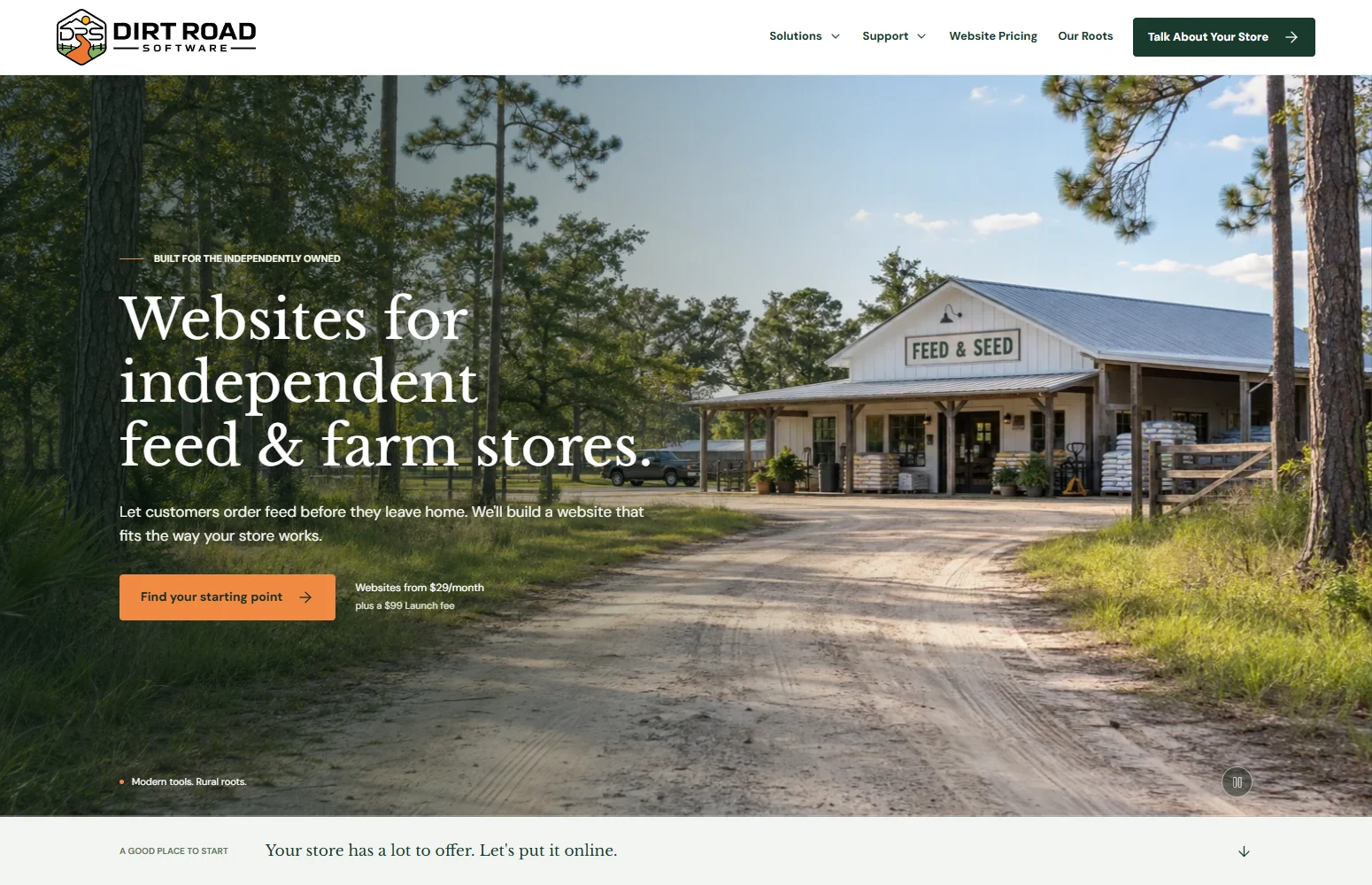
The site starts on a dirt road through Florida pines. As the visitor scrolls, the view moves toward a feed store. That setting carries the brand without replacing the practical questions: what does the website include, what can the store manage, and how does online ordering fit?

Custom HTML, CSS and JavaScript keep that experience tied to native scrolling. Motion can be paused and respects reduced-motion preferences. Responsive page layouts carry the same identity into product explanations and support pages.

The work connects website design and development to a specific audience. The store owner sees the service in the language of store work. For businesses that need a managed website with optional chat and scheduling, our AI-powered websites offer is another starting point.

Dirt Road Software homepage with its road-to-store scene and website offer for independent feed and farm stores
The public Dirt Road Software website.
Roadside by Dirt Road Software
02Web operations

Give the store control of its own information.

A holiday closure should not become a development ticket. Neither should a new product photo.

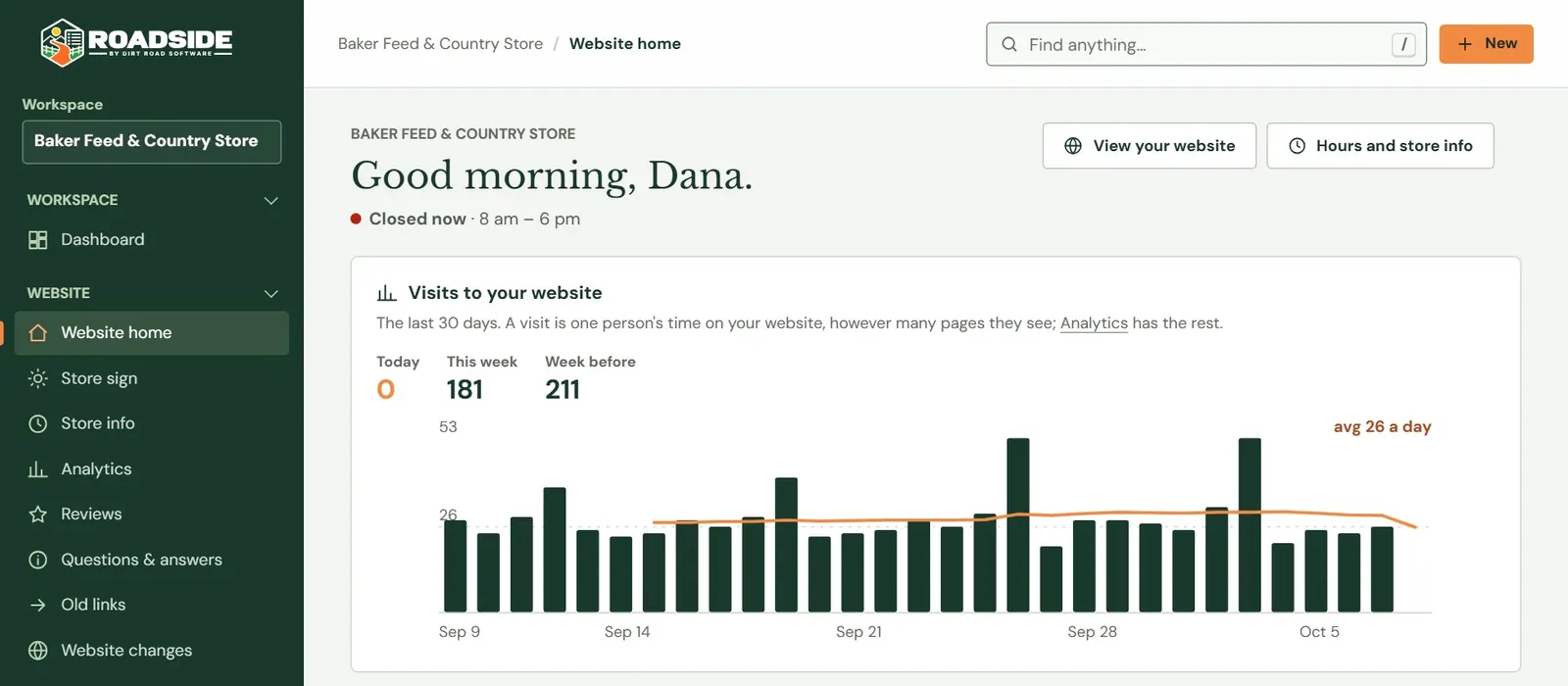
Roadside brings routine website work into one browser-based panel. Staff can change store hours, update the website sign and manage product information. A publishing readout shows whether saved changes have reached the public site.

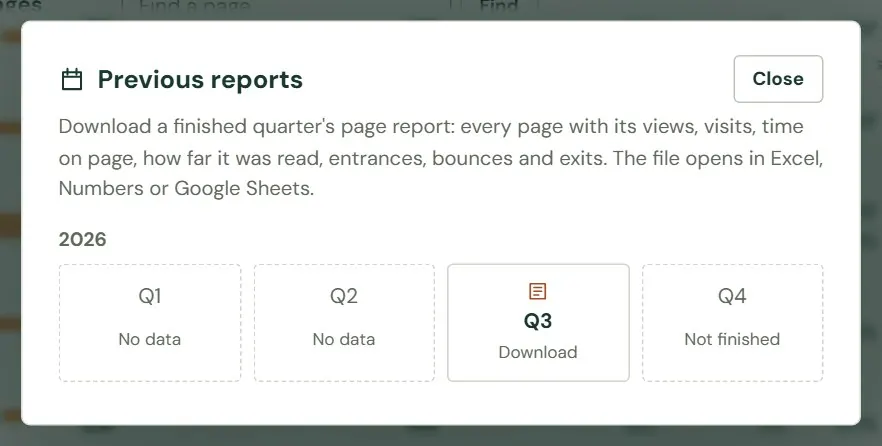
The home screen gathers work that needs attention, including website messages and orders to prepare. Analytics gives the owner a view of traffic and the pages people visit. Larger website requests have their own change workflow.

This is custom business software shaped around who uses it. Store owners get management controls; staff see the tools their role permits.

Explore the Roadside panel in the manual
Roadside website home showing store hours, a visits chart and the store workspace navigation
Website home. Demonstration data from the Roadside manual.
03Products and ecommerce

The product page is only the beginning.

Selling feed online means accounting for bag sizes, stock and the work of getting an order ready.

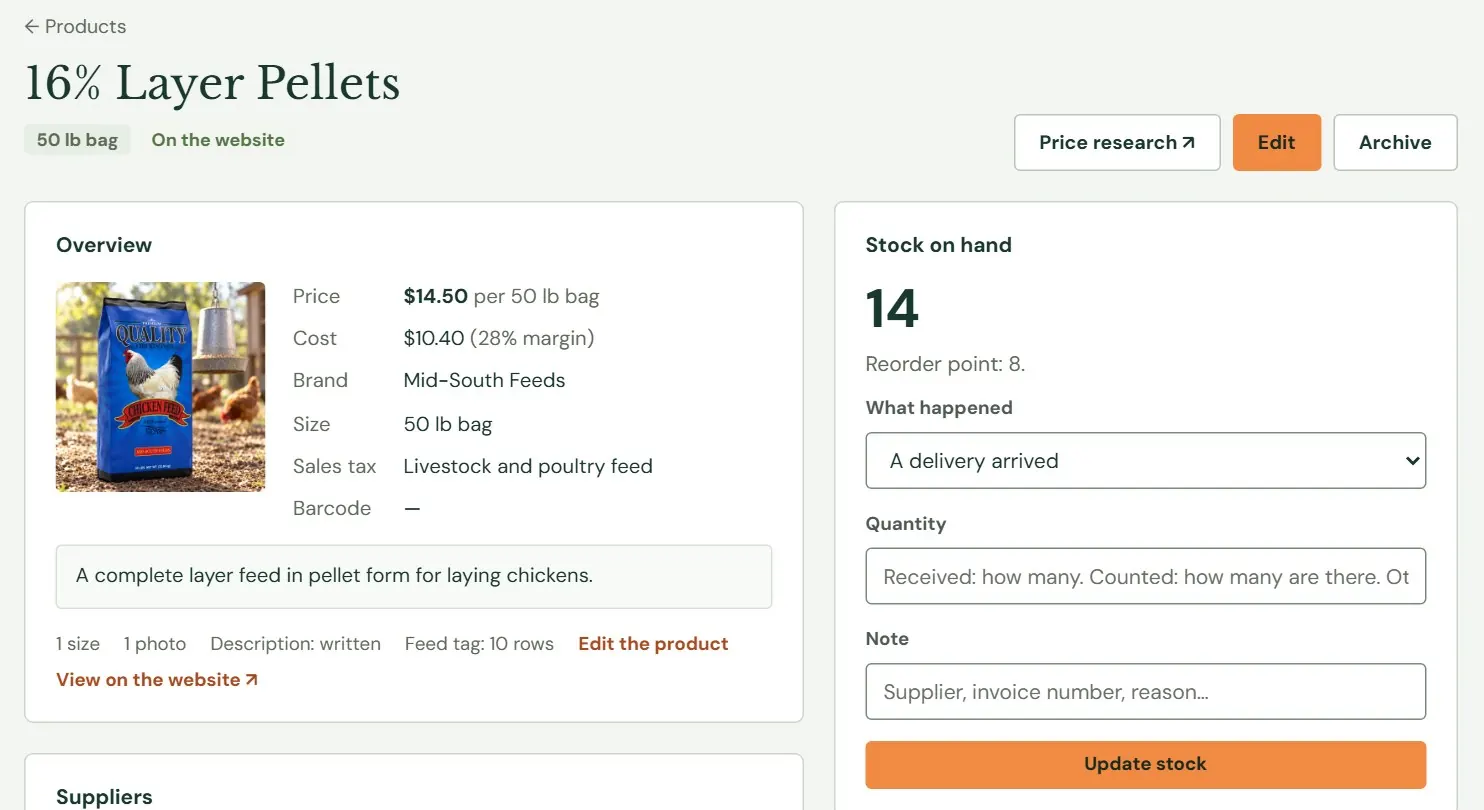
Roadside's catalog supports product sizes with their own prices and photos. Staff can update stock or bring an existing catalog in through CSV import. The product record keeps the description close to the information needed to sell and restock it.

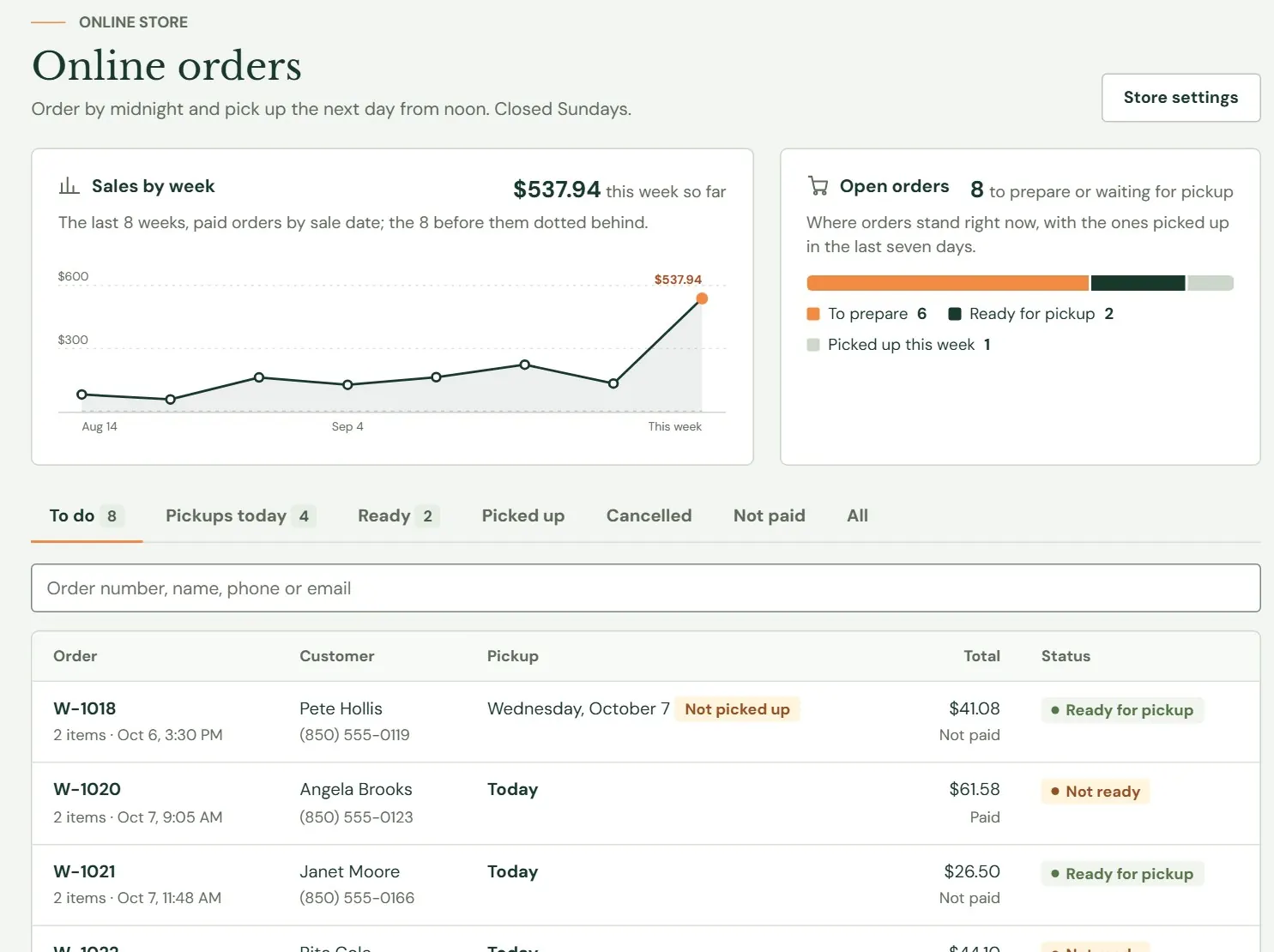
The ecommerce workflow continues through checkout into order preparation, with customer accounts and payment handling. The manual follows the store's side of the transaction, including holds and refunds, so the interface has guidance for what happens after someone places an order.

Optional Fetch with AI helps prepare product descriptions and feed-tag information for review. It sits inside the product workflow, where a person can check the result against what the store actually sells.

On the store website, OpenPin provides the map context that helps the AI chatbot check whether a visitor is within the store's free-delivery range. The assistant compares the visitor's location with the store's configured radius, so a shopper can ask about delivery before placing an order. Roadside lets staff adjust that radius; checkout applies its own delivery rules.

See the catalog workflow
Roadside product record for layer pellets, with price, bag size and stock controls
Product and stock controls. Demonstration data.
04Engineering the service

A platform that can serve more than one store.

A website service needs a repeatable way to run its customers' sites. Roadside separates shared application behavior from each store's configuration, with publishing and update paths that can be maintained as the product grows.

A modular PHP application

Roadside maintains its own application base, with separate modules for website operations and online ordering. Store-specific configuration and template overrides let installations share the platform while keeping their own identity.

Publishing and storefront APIs

Saved edits are gathered into a publishing run that rebuilds the affected website pages. The panel reports publishing progress, with pause and resume controls. JSON interfaces also let a separately built storefront use the same product and store records.

Data and deployment

The database layer supports MySQL and MariaDB in production, with SQLite for local development and tests. Versioned migrations handle schema changes. Scheduled tasks keep background work moving, while runtime records remain separate from deployable application files.

Access by responsibility

Team invitations and role-based access separate store management from day-to-day staff work. The manual explains which screens each role can use, including a read-only role for people who need to inspect information without changing it.

05Support infrastructure

The instructions ship with the software.

Roadside's 27-chapter manual takes a store from its first sign-in through everyday operations. It is part of the product, built around the screens and decisions a customer actually encounters.

One source, two reading formats

The same chapter source produces searchable web help and a downloadable PDF. Screenshot callouts sit alongside the instructions, and quick answers give returning users a shorter path to a specific problem.

Help that can be maintained

The documentation build checks internal links, image references and page structure. Public help lives alongside the Dirt Road Software website, so a store can reach an explanation directly without first opening a support conversation.

What does your software need to run?

A customer-facing website and the application behind it should be planned together. Tell Sputnik Digital Effects how your business works and where your team needs better tools.

Explore digital product development
Discuss your project