
Skydiving.com

A thousand calls a day, and the switchboard that answered them.

Skydiving.com was the front of a national skydiving business: a network of city sites and market domains feeding one call center. At its 2016 height the network produced over a thousand phone calls a day, with several summer days clearing two thousand. It sent more people on their first skydive than anyone else in the world. Designed and built between 2012 and 2018 by the founder of Sputnik Digital Graphics, years before the studio was incorporated.

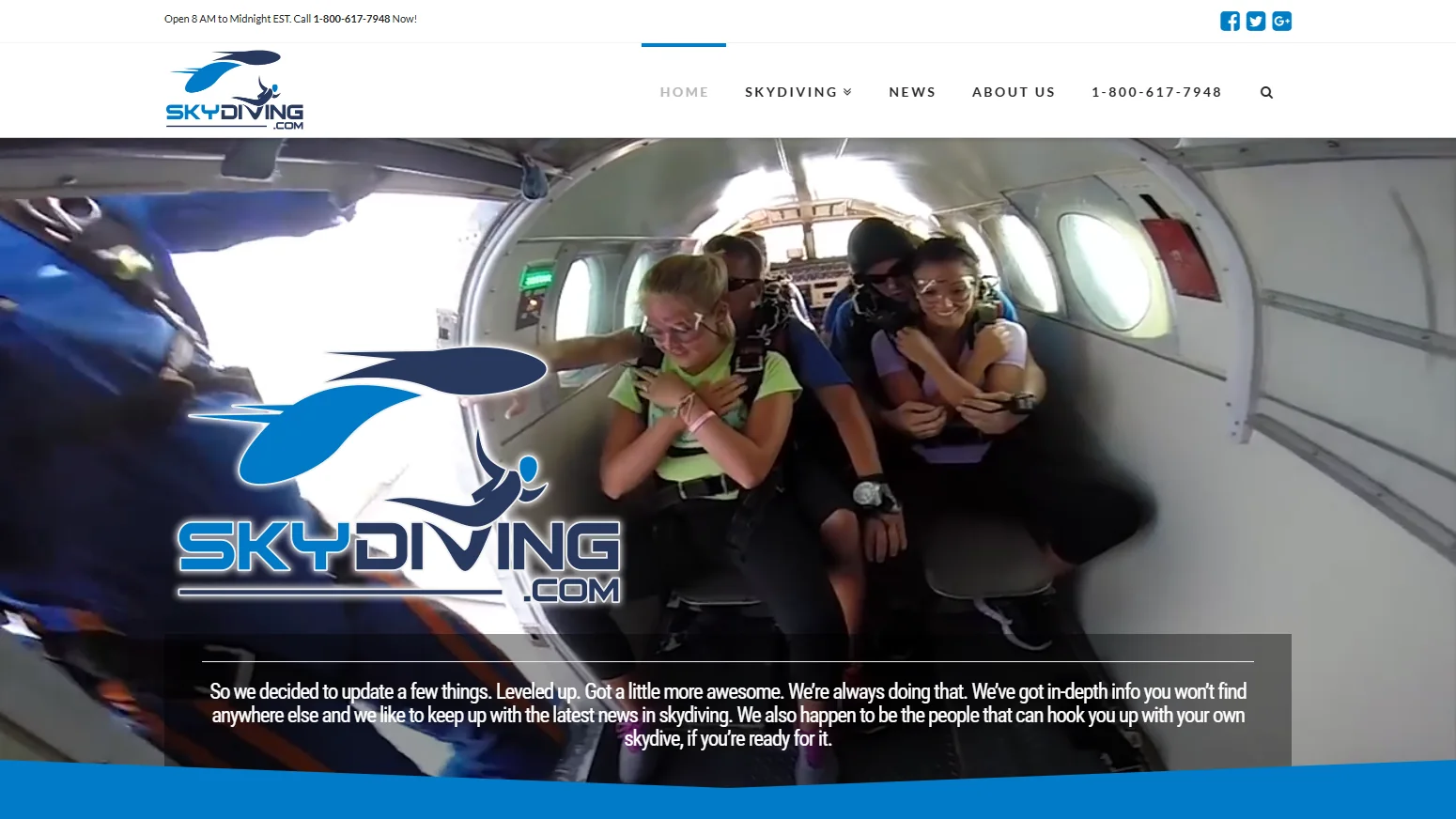
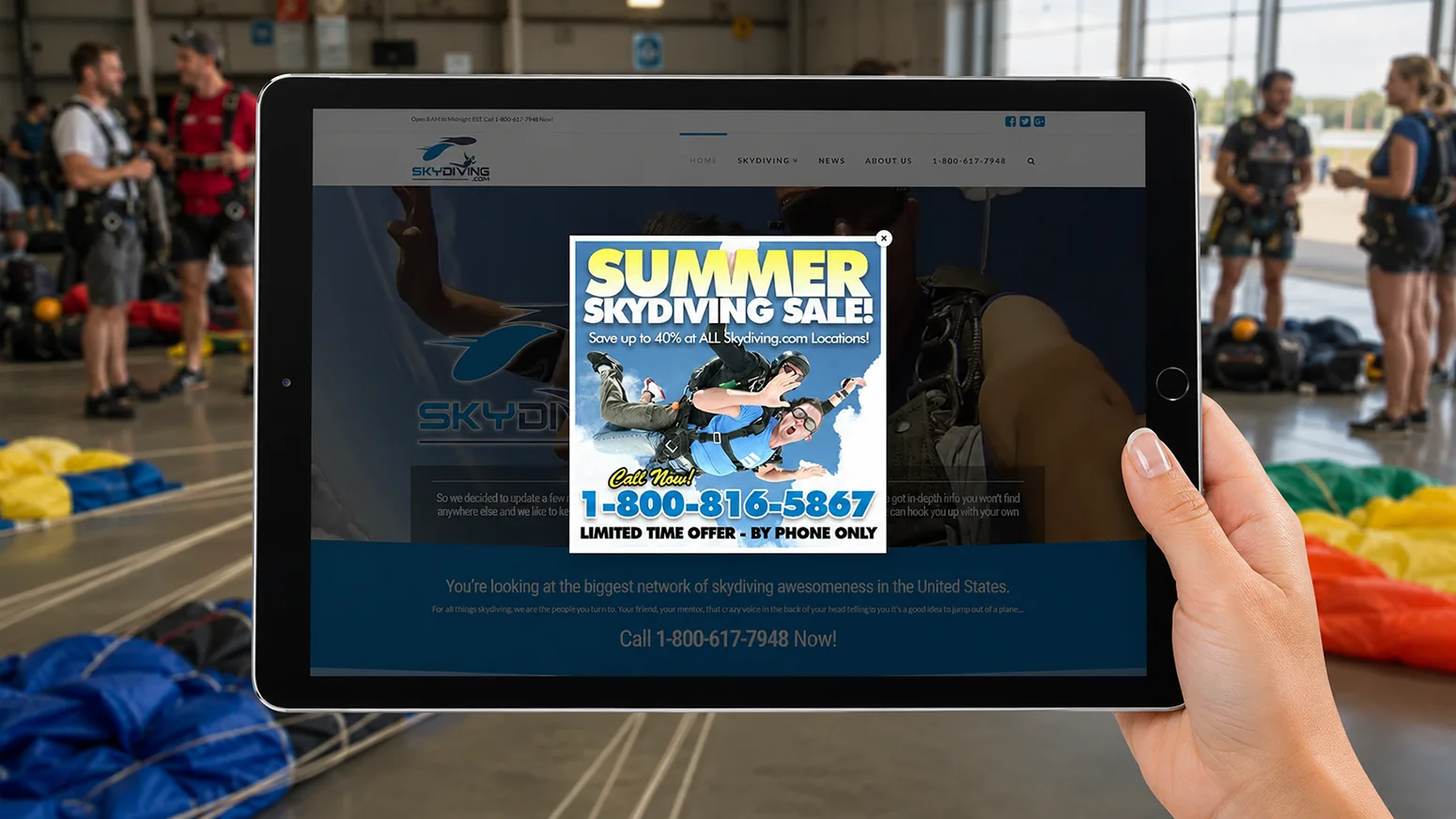
The Skydiving.com homepage in its January 2017 design, a full-width photo of tandem students in the aircraft
Peak day 2,000+ calls
Daily volume, 2016 1,000+ calls
Agent extensions 80+
Directory coverage 51 states and territories
Paid channels AdWords only
01 The network

One offer, carried into every market.

Somebody deciding to jump out of an airplane searches for the place they will do it, not for a national brand. So the network went to the cities.

Skydiving.com carried the brand, the toll-free line, and the gift certificate business, advertising a drop zone network more than 85 locations deep. Underneath it sat roughly 115 metro landing pages on clean extensionless URLs, standalone market domains such as laskydiving.com running the same template with the city swapped in, and a location service that resolved drop zones by state, metro, and ZIP across 51 states and territories.

The whole structure existed to convert a local search into a phone call. Rankings did the work and Google AdWords was the only paid channel the business ever bought. That is why the phone system mattered as much as the sites: the network's entire output was inbound calls, and a dropped call was a lost customer.

  • National brand site
  • Metro landing pages
  • Market domains
  • ZIP and metro directory
  • Gift certificate product
  • Organic-first acquisition
02 The switchboard

Built by hand, because nothing off the shelf fit.

A thousand inbound calls a day is not a website problem. It is an operations problem, and it was solved in house rather than rented.

The phone system was built on FreePBX and administered directly, which meant the routing logic could be shaped around how the business actually sold rather than around a vendor's idea of a call center. More than 80 extensions covered sales agents, customer service, and administration. Inbound queues held callers with custom hold music at peak instead of dropping them, IVR menus sorted intent before an agent picked up, and conditional routing mapped several hundred inbound numbers onto the right group.

The carrier side was operated the same way. Several hundred local and toll-free numbers came directly from Bandwidth.com, so a caller in a given city reached a number that looked local to them. All VoIP was handled internally, with agents working from softphones on their PCs, which made a seat a login rather than a desk. In the summer of 2016 that system took more than two thousand calls in a single day.

  • FreePBX platform
  • 80+ agent extensions
  • Queues and hold music
  • IVR call sorting
  • Several hundred DIDs
  • In-house VoIP
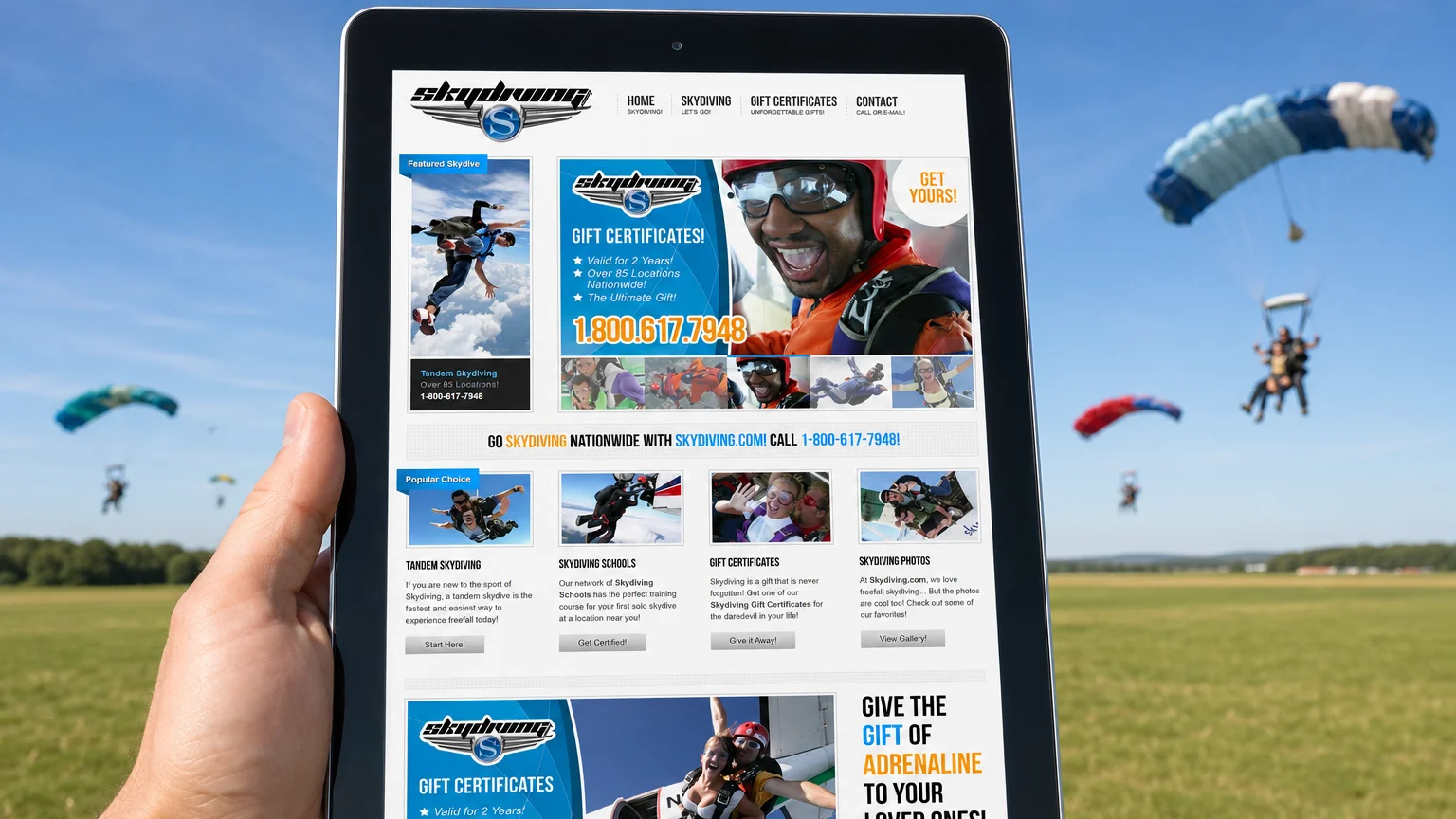
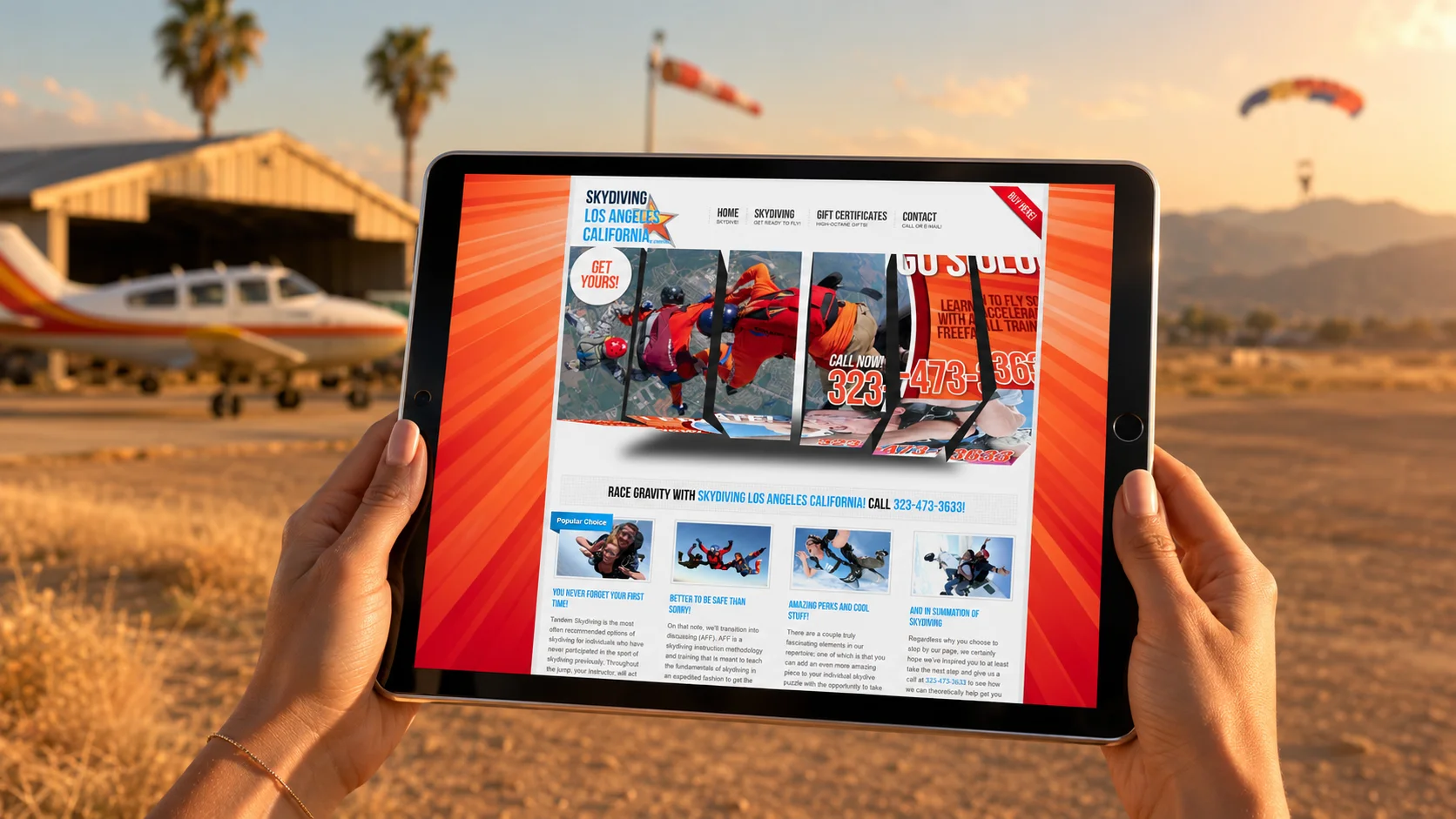
The skydiving.com site on a tablet in 2014, its earlier design running on the same network
skydiving.com on a tablet, 2014

Every system on the stack.

Sites, switchboard, carrier, and demand were one machine. Traffic was only worth earning because there was somewhere for it to land, and the phone system was only worth building because the sites kept it ringing.

Sys 01

The site network

Skydiving.com was the flagship, but it never worked alone. A spread of city and market sites carried the same offer into individual metros, and every one of them pointed at the same call center.

  • Skydiving.com The national brand and primary destination, carrying the toll-free line and the gift certificate business
  • Metro landing pages Extensionless city URLs for roughly 115 US markets, from Akron to Youngstown, each written for local search
  • Market sites Standalone domains such as laskydiving.com running the same template with the city swapped in
  • Directory engine A PHP location service resolving drop zones by state, metro, and ZIP across 51 states and territories
  • International pages More than a hundred country guides extending the footprint beyond the US network
Sys 02

Telephony core

The websites only mattered because somebody answered. The phone system was hand-built in house on FreePBX and run as the operational center of the business.

  • FreePBX platform A self-administered PBX rather than a hosted call center product, so routing logic stayed under direct control
  • 80+ extensions Sales agents, customer service, and administration on individually provisioned lines
  • Inbound call queues Callers held in queue with custom hold music instead of being dropped at peak volume
  • IVR menus Interactive voice response sorting callers before an agent ever picked up
  • Conditional routing Multi-stage rules mapping several hundred inbound numbers onto the right queue and agent group
Sys 03

Carrier and VoIP

Every number, every trunk, and every endpoint was operated in house. Nothing about the voice path was outsourced to a third-party call center.

  • Bandwidth.com numbers Several hundred local and toll-free numbers provisioned directly from the carrier
  • In-house VoIP SIP handling run internally rather than rented from a managed provider
  • Agent softphones Agents worked from softphones on their PCs, so a seat was a login rather than a desk phone
  • Per-market numbers Local numbers per market so a caller in a city reached a number that looked like their own
Sys 04

Demand generation

A thousand calls a day is a traffic problem before it is a phone problem. The network was built to earn its volume rather than buy it.

  • Organic rankings Search was the engine. The network was designed around ranking for city and service queries at scale
  • Google AdWords The only paid marketing channel the business ever used
  • Gift certificates A packaged product sold nationwide and redeemable across the drop zone network
  • Toll-free capture A single memorable national line carried across every site and creative
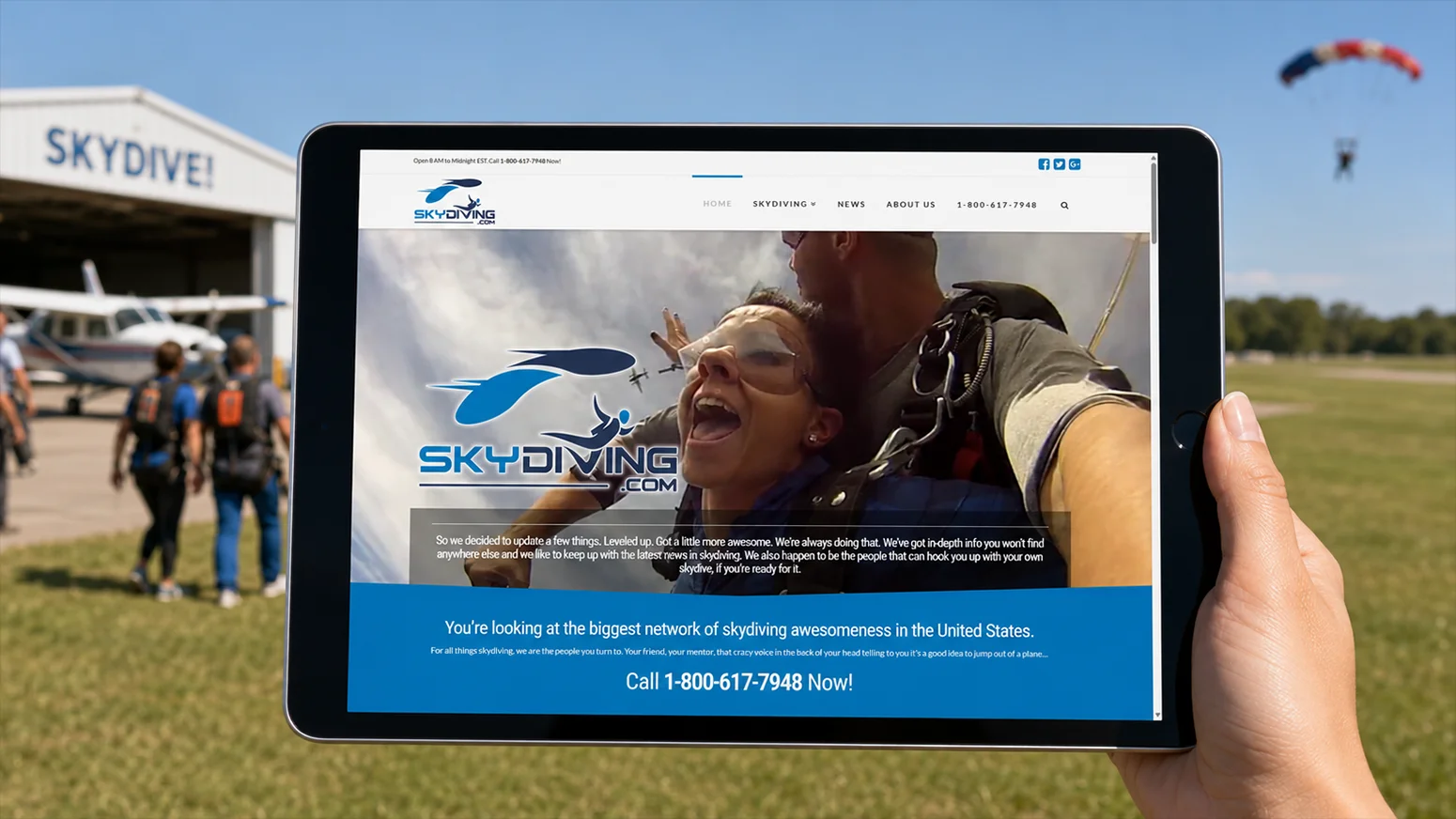
The 2017 homepage hero

Autoplaying a full-width video hero in 2017 was not a given. Mobile browsers throttled or blocked autoplay, connections were slower, and one heavy clip could stall the page or spend a visitor's data before a word loaded. Making a reel play muted, loop cleanly, and hold up across browsers meant deliberate encoding, sized sources, and fallbacks, years before any of that became routine.

03 The archives

Neither site has been online since 2018.

Skydiving.com was sold in 2018 and now belongs to an unrelated business. Laskydiving.com is gone entirely. So both were rebuilt here, from captures, rather than pointed at a dead link.

Each archive is a working copy of the original homepage: every stylesheet, script, image, and font restored and served locally, with nothing calling out to a host that no longer answers. Third-party trackers and form endpoints were cut, because a visitor typing into a decade-old form would otherwise really be posting to somebody's account. The captured bytes are otherwise left alone. Copy, prices, and claims are exactly as they stood.

They are worth opening for the same reason they were worth saving. This was the machine that ran a thousand calls a day, and the only place left to see it.

Need a channel that actually rings?

This was search at scale wired straight into an operation that could answer. The same instinct, one template carried into every market a business can serve, is what the SKYNET build automated years later. If you need volume and somewhere for it to land, open a channel.

Start your build